
Hack-AI-Thon 2025
Tattvavid Technologies proudly presents Hack-AI-Thon — an exciting AI-based hackathon designed to bring together innovators, developers, and problem-solvers. This event will challenge participants to leverage Artificial Intelligence to create impactful solutions that push the boundaries of technology and imagination.
📅 Date: 07th October, 2025
⏰ Time: 09:00 A.M. to 06:00 P.M.
📍 Venue: 13th Floor-Conference Room Shivam Trade Center (STC), Near Vakil Saheb Bridge, SP Ring Road, Bopal, Ahmedabad – 380058.
🔗 Register Here: Click here to register
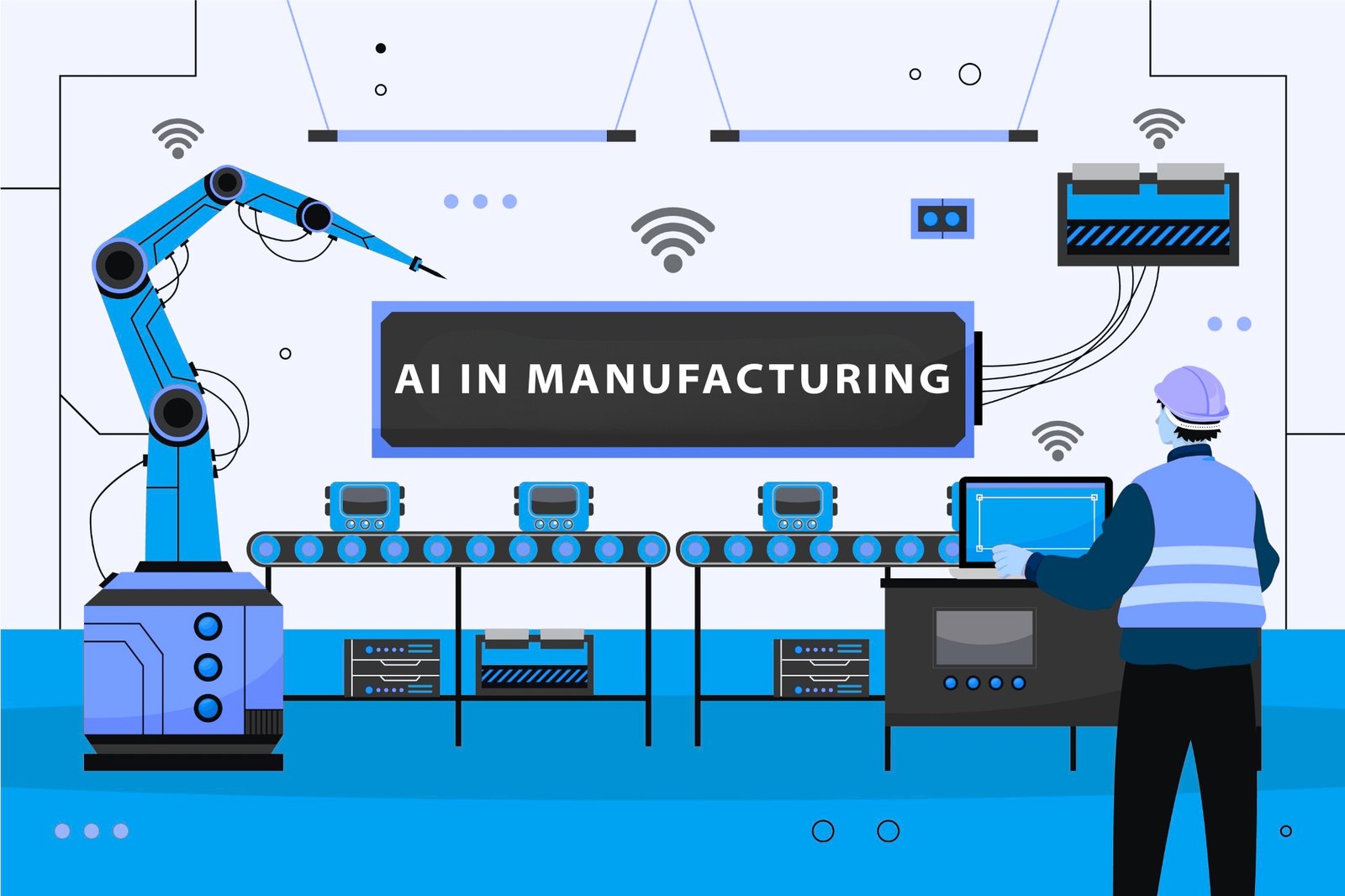
Problem Statement 1: Smart Quote Prediction for Manufacturing Orders
In the manufacturing industry, sales teams often prepare multiple quotes for customers based on product requirements, customization, and pricing strategies. However, only a fraction of these quotes are accepted and converted into confirmed orders. Preparing multiple unsuccessful quotes leads to wasted time, effort, and reduced efficiency.
Challenge
Design a data-driven solution that can predict the most acceptable quote for a customer—the one with the highest chance of being converted into an actual order.
Key Requirements
- Use historical data of quotes and orders (price, product type, customer segment, discount levels, lead time, etc.).
- Apply machine learning / analytics techniques to identify factors influencing customer acceptance.
- Build a prediction model that suggests the most optimized quote (price + terms) to maximize order conversion probability.
- (Bonus) Provide a dashboard or visualization that shows:
- Quote success probability
- Key influencing factors
- Recommended “best quote” for the sales team
Expected Outcome
- A working predictive model or prototype that can help manufacturing companies increase their quote-to-order conversion rate.
- Innovative approaches that blend business logic with AI/ML, automation, or data visualization.
Problem Statement 2: Smart Medicine Side-Effect & Allergy Prediction
In the healthcare industry, prescribing the right medication while avoiding harmful side effects or allergic reactions is a critical challenge. Patients often have complex medical histories, and introducing a new medicine without considering past records can lead to adverse drug reactions (ADRs), allergies, or drug–drug interactions. This creates risks for patients and additional burdens for healthcare providers.
Challenge
Design an AI-powered solution where a user can upload their medical history/report and enter the prescribed medicine(s). The system should then:
- Predict the likelihood of side effects or allergic reactions based on the patient’s history and known drug interaction data.
- If a high risk is detected, recommend safer alternative medicines or treatment options.
Key Requirements
- Use medical history data (allergies, past treatments, lab results, existing medications) to assess risk.
- Integrate drug–drug interaction (DDI) and allergy databases to identify potential conflicts.
- Apply machine learning / NLP / predictive modeling to detect side-effect probabilities.
- Suggest alternative medications that are safer while addressing the same medical condition.
- (Bonus) Provide a dashboard or chatbot-style interface that shows:
- Risk score for entered medicines
- Detected interactions/allergies
- Recommended alternatives with justification
Expected Outcome
- A working predictive prototype that enhances patient safety by proactively identifying risky prescriptions.
- Innovative approaches combining AI/ML, medical data processing, and recommendation systems.
- A user-friendly interface (dashboard or conversational bot) for doctors/patients to quickly check risks before proceeding with medication.
Problem Statement 3: Predicting Equipment Underutilization in Renewable Plants
In the renewable energy industry, efficient utilization of assets such as solar panels, wind turbines, and hydro equipment is critical for maximizing energy generation and profitability. However, due to factors like maintenance delays, grid limitations, weather variability, and scheduling inefficiencies, renewable assets are often underutilized. This results in lost revenue, wasted potential, and reduced sustainability impact for energy providers.

Challenge
Design an AI-powered solution that analyzes historical plant performance and operational data to:
- Predict periods of underutilization for renewable assets (solar, wind, hydro).
- Identify key factors contributing to inefficiency (e.g., downtime, grid constraints, weather mismatch, poor scheduling).
- Recommend optimized operational strategies to improve asset utilization and maximize renewable generation.
Key Requirements
- Use historical datasets (plant output, capacity, downtime logs, weather data, grid demand records).
- Apply machine learning / predictive modeling to forecast underutilization patterns.
- Identify top drivers of inefficiency through feature importance or explainable AI.
- Suggest actionable recommendations (e.g., rescheduling maintenance, energy trading, storage utilization).
- (Bonus) Provide a dashboard or visualization tool that shows:
- Predicted underutilization periods.
- Factors influencing efficiency losses.
- Recommended optimization strategies.
Expected Outcome
- A working predictive prototype that helps renewable energy companies anticipate and minimize equipment underutilization.
- Actionable insights combining AI/ML, forecasting, and optimization to improve operational decision-making.
- A user-friendly interface that allows plant managers to monitor risks and take corrective actions in advance.
Event Perks

Interview & Internship Opportunities

Participation Certificates for all teams